
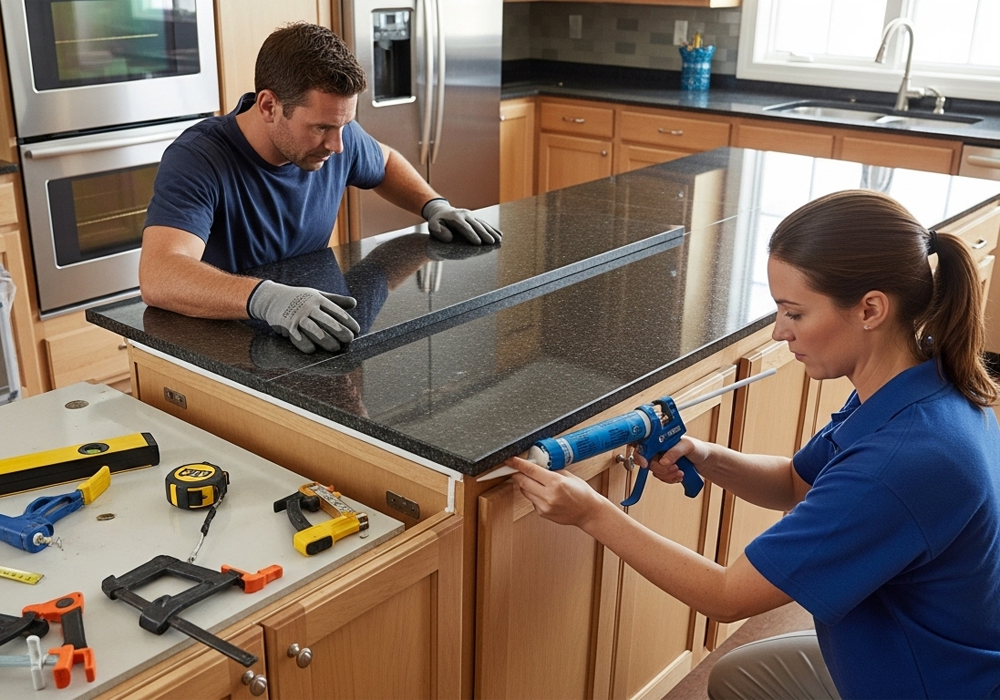
When homeowners invest in new countertops, most of the attention goes to choosing the right material. Quartz, granite, marble, and quartzite all offer different visual and functional benefits. However, one of the most important factors in long-term performance is not the stone itself, but the quality of the installation.
Even the most expensive countertop can develop cracks, uneven surfaces, or joint separation if it is not installed correctly. Proper countertop installation protects your investment and prevents structural issues that can become expensive to repair.
The foundation beneath the stone matters
Countertops are heavy. Natural stone slabs and engineered quartz place significant weight on cabinets and support structures. If the base is not properly leveled and reinforced, the stone may experience stress over time.
Uneven cabinets create pressure points beneath the slab. These pressure points can lead to hairline cracks that gradually expand. In some cases, homeowners may not notice the issue until the damage becomes visible on the surface.
Professional countertop installation includes:
- Careful inspection of cabinet alignment
- Level adjustments before placing the slab
- Reinforcement where necessary
- Secure anchoring to prevent shifting
This preparation ensures the stone sits evenly, distributing weight properly across the entire surface.
Improper support leads to cracking
Overhang areas, such as kitchen islands and breakfast bars, require special attention. Without adequate bracing or support brackets, these sections can flex under weight.
For example, when someone leans on an unsupported overhang, the slab may slightly bend. Over time, this repeated pressure weakens the stone. Quartz and granite are strong materials, but they are not flexible. Without proper support, cracks can develop.
Professional installers calculate safe overhang limits and install hidden support systems when needed, preventing long-term structural stress and maintaining the integrity of the countertop.
Joint alignment prevents separation
Many kitchens require multiple slabs, especially in large layouts. The seams where slabs meet must be precisely aligned and secured.
Poorly aligned joints can cause:
- Visible height differences
- Gaps that collect debris
- Weak bonding between slabs
- Gradual separation over time
As joints shift, they may allow moisture to seep underneath the surface. Water exposure weakens adhesives and can damage cabinets below.
Proper installation ensures tight seams, accurate leveling, and professional bonding techniques. When done correctly, seams are discreet and structurally secure.
Protection against moisture damage
Water is one of the most common causes of long-term countertop problems. Areas around sinks, faucets, and dishwashers are especially vulnerable.
If the installation does not include proper sealing and silicone application, moisture can penetrate beneath the slab. Over time, this may cause:
- Cabinet swelling
- Mold growth
- Warped support structures
- Loosening of the countertop
Professional countertop installation includes sealing vulnerable edges and ensuring that sink cutouts are properly reinforced. This prevents water infiltration and extends the lifespan of both the countertop and the cabinetry.
Precision cutting reduces weak points
Fabrication and installation work together. When cutouts for sinks or cooktops are poorly measured, they can create stress points in the stone.
Corners that are cut too sharply increase the likelihood of cracking. Professional fabricators use precise measurements and smooth corner techniques to reduce tension within the slab.
Additionally, transporting and positioning heavy stone requires experience. Improper handling during installation can create invisible fractures that worsen over time.
An experienced team understands how to move, position, and secure each slab safely, minimizing risk from the start.
Long-term value and cost prevention
Countertops are a significant investment. Replacing a damaged slab can cost thousands of dollars, especially with natural materials like marble or quartzite.
Many structural problems are preventable. When installation is rushed or handled by inexperienced crews, small mistakes may not appear immediately. However, months later, homeowners may begin to notice cracks, separation, or instability.
Choosing professional countertop installation protects:
- The lifespan of the stone
- The stability of cabinets
- The overall kitchen structure
- The resale value of the home
In real estate markets like the Charleston area, kitchens play a major role in property value. Structural issues in countertops can negatively affect inspections and buyer confidence.
Experience makes the difference
Proper installation requires more than placing a slab on cabinets. It involves evaluation, leveling, support reinforcement, seam precision, moisture protection, and finishing.
At Master Top, countertop fabrication and installation are handled with attention to detail from start to finish. With years of experience working with quartz, granite, marble, and quartzite, the team understands how to prevent structural problems before they begin.
From precise measurements to clean and organized installation practices, every step is designed to protect your investment.
Conclusion
The beauty of a countertop is only part of its value. What truly determines longevity is how well it is installed.
Improper installation can lead to cracking, joint separation, moisture damage, and costly repairs. Professional countertop installation ensures proper support, alignment, sealing, and long-term durability.
If you are planning a kitchen or bathroom upgrade, don’t overlook the importance of expert installation. Contact Master Top today to request a consultation and ensure your countertops are installed with precision, stability, and long-term performance in mind.